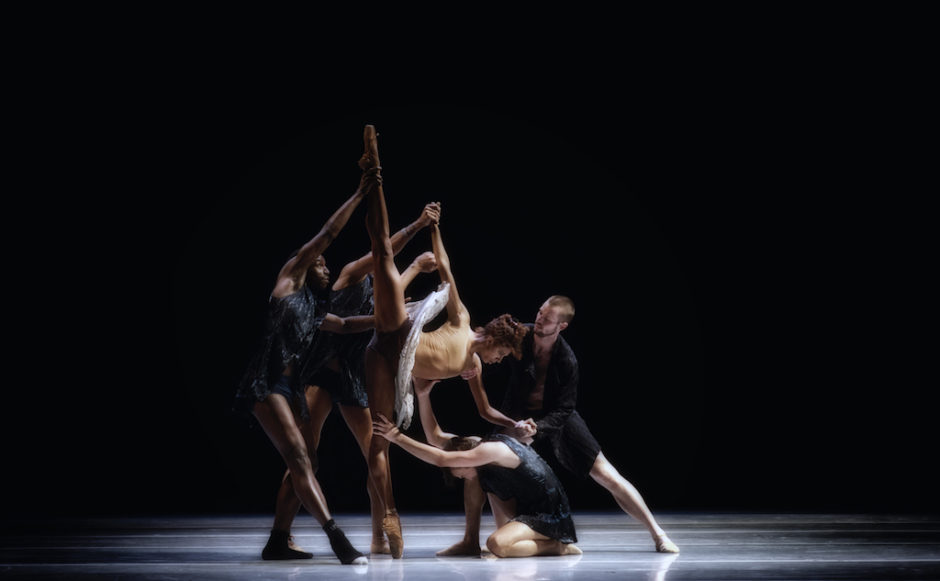
So here's what Alonzo King LINES Ballet actually is: a contemporary ballet company that doesn't just dance, it collides with composers, musicians, and visual artists from everywhere. They pull from cultural traditions most companies wouldn't touch, wouldn't know how to touch, and somehow make classical ballet say things it was never supposed to say. Alonzo treats ballet like science, like there are actual universal principles of energy and geometry governing how bodies move through space. Which sounds insane until you watch them dance. Then it makes perfect sense.
I got lucky. In 2016, Muriel Maffre made an introduction that changed everything. Muriel and I met years earlier when we were both cast in Jerome Bel's "The Show Must Go On." I had the DJ role, she was coming off seventeen years as a principal dancer at San Francisco Ballet. Paris Opera Ballet School trained, the kind of dancer who could walk onstage and do nothing and make it compelling. By the time she connected me with LINES, she was already deep into her second act: CEO of the company, after running the Museum of Performance + Design.
But the truth is I'd already been orbiting Alonzo for years, he lived across the street from the house we held the Franconia Performance Salon's in, and in a city like San Francisco used to be, those accidents of geography mattered. You'd see him, you'd nod, you'd occasionally talk. Then one day you're trusted with a camera.
What followed was eight years of the kind of access you don't take for granted: performances until I lost count, video work with the Kronos Quartet, with Zakir Hussain's hands moving faster than my shutter speed, with Vanessa Vo bringing Vietnamese tradition into impossible conversation with contemporary ballet. Jason Moran's piano. Lisa Fischer's voice, that voice, filling spaces bigger than any theater. Photoshoots across multiple continents. Three gallery exhibits. The whole beautiful, exhausting thing.
I worked closely with Robert Rosenwasser, LINES Co-founder and current Creative Director, a guy who understood that capturing dancers means understanding light, patience, and the precise moment bodies create geometry in space. And here's what you learn spending that much time with artists at this level: they're mercurial as hell. Brilliant one day, impossible the next. It's the deal. You take it or you don't.
All of this happened while San Francisco's arts scene was slowly, then quickly, falling apart around us. The Mission turned into something out of early seventies New York, the unhoused everywhere, addicts nodding off on every corner, crime that made you calculate your route before leaving the studio. The city I knew, weird, affordable, committed to making things that mattered, was being gutted. But LINES kept dancing. That's the thing about real artists. The world burns, rents triple, venues close, and they keep showing up to rehearsal. That kind of discipline, that refusal to quit… you don't see it everywhere… you document it when you can.
“When you have to ask yourself: Why am I holding back, why am I doing pictures? And it's usually: that's because you're afraid. Bottom line. And for great art you have to be brave. So that the whole world is going to laugh at you but you don't care. You follow that song.”Alonzo King