Stanford University
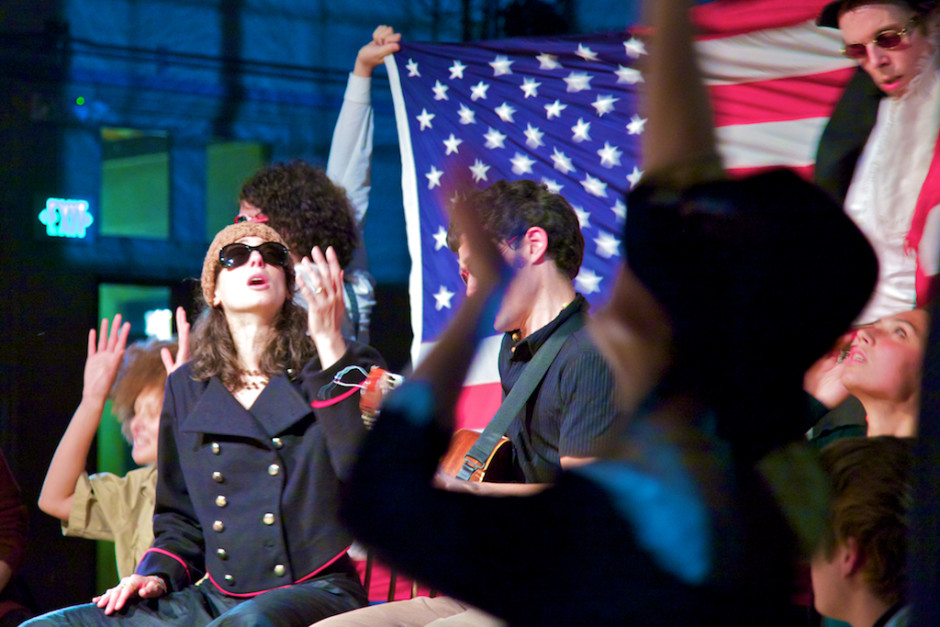
The Workcenter brings the I Am America project to Stanford. Saint-Louis Augustin, Rodriguez, and the Open Program performers in a room that becomes something other than a room.
“Why are we concerned with art? To cross our frontiers, exceed our limitations, fill our emptiness — fulfill ourselves. This is not a condition but a process in which what is dark in us slowly becomes transparent.”Jerzy Grotowski · Towards a Poor Theatre
What I've documented here is the thing nobody wants to admit about art that matters. It's not about being seen. It's about being fucking obliterated. The Workcenter doesn't give a shit about your comfort, your Instagram attention span, or whether you "get it." These images capture bodies in the act of becoming something else, something that can't be commodified or explained away.
These performers aren't performing. They're excavating. Watch how the light falls on Saint-Louis Augustin's face in that Stanford frame, how Rodriguez's body becomes a question mark the audience has to answer for themselves. This isn't spectacle. It's anti-spectacle. The kind of work that makes you realize how much of your life you've spent watching instead of being.
The Open Program lineage carries this weird, beautiful burden: keeping alive a practice that refuses to be a product. It's like maintaining a fire in a world addicted to LEDs. The photographs aren't meant to prettify the work. The hope is that they convey the actual sweat, the strange intimacy of people willing to stand in a room and mean something without irony, without safety nets.
What gets me is how these spaces, Stanford, SFMOMA, PAI, become temporary churches for people who don't believe in churches anymore. The darkness in these images isn't just lighting choice. It's metaphysical. Mario and the performers are doing what Grotowski demanded: crossing frontiers not by adding more but by stripping away until there's nothing left but the irreducible core of human presence.
This work pisses off both the art establishment (too earnest, too rigorous) and the general public (too demanding, too weird). Which means it's probably doing something right. This documentation catches people in the act of giving a damn about transformation in an age of performance, about depth in an era of surface. That quote at the top, what is dark in us slowly becomes transparent, that's not poetry. That's a threat and a promise.
“To cross our frontiers, exceed our limitations, fill our emptiness. This is not a condition but a process in which what is dark in us slowly becomes transparent.”Jerzy Grotowski
The Workcenter brings the I Am America project to Stanford. Saint-Louis Augustin, Rodriguez, and the Open Program performers in a room that becomes something other than a room.
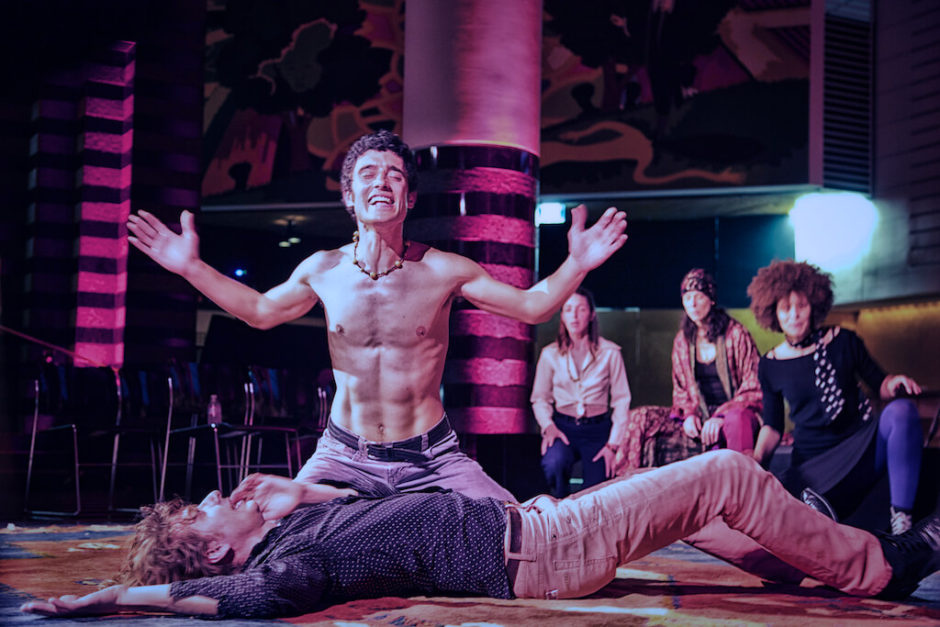
Songs, bodies, and the Workcenter's particular kind of charged silence brought into a museum that was, briefly, transformed by it. Chrystèle Saint-Louis Augustin, Cinzia Cigna, Davide Curzio, Marina Gregory, Alejandro Tomás Rodriguez.
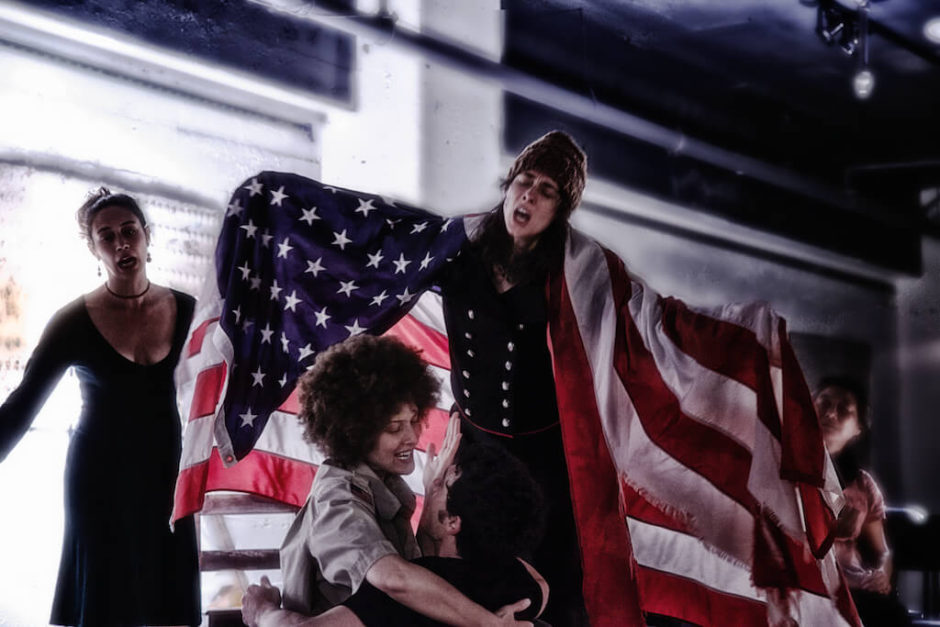
The Allen Ginsberg-anchored work in a different room with different light. Saint-Louis Augustin, Itahisa Borges Méndez, Marina Gregory, Alejandro Tomás Rodriguez. Same demand: presence over performance.
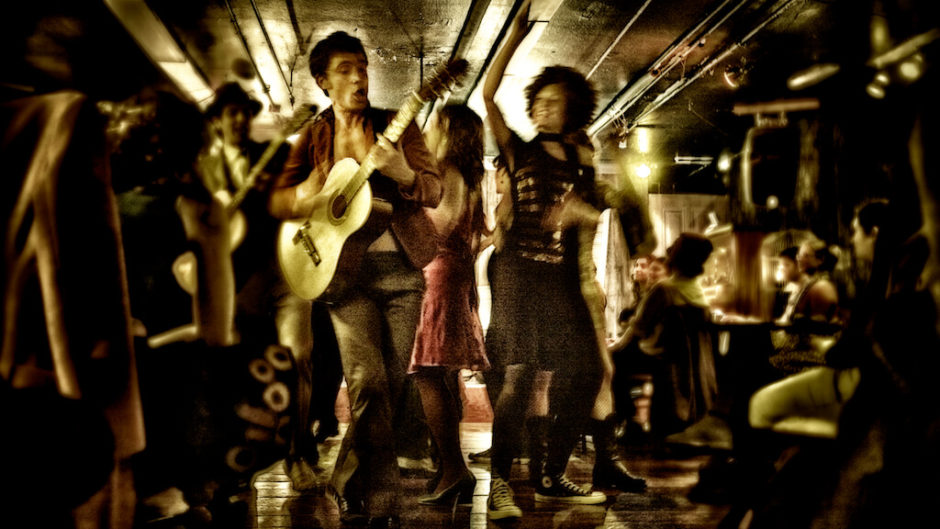
Mario Biagini and the full ensemble: Saint-Louis Augustin, Borges Méndez, Bricken, Cigna, Curzio, Gregory, Hopfner, Kazimierska, Marcelli, Rodriguez, Ulehla. The Workcenter at full strength.
“What is dark in us slowly becomes transparent. That's not poetry. That's a threat and a promise.”Jamie Lyons